3
face velocity setpoints compared: 100, 50 and 70 fpm
Same day
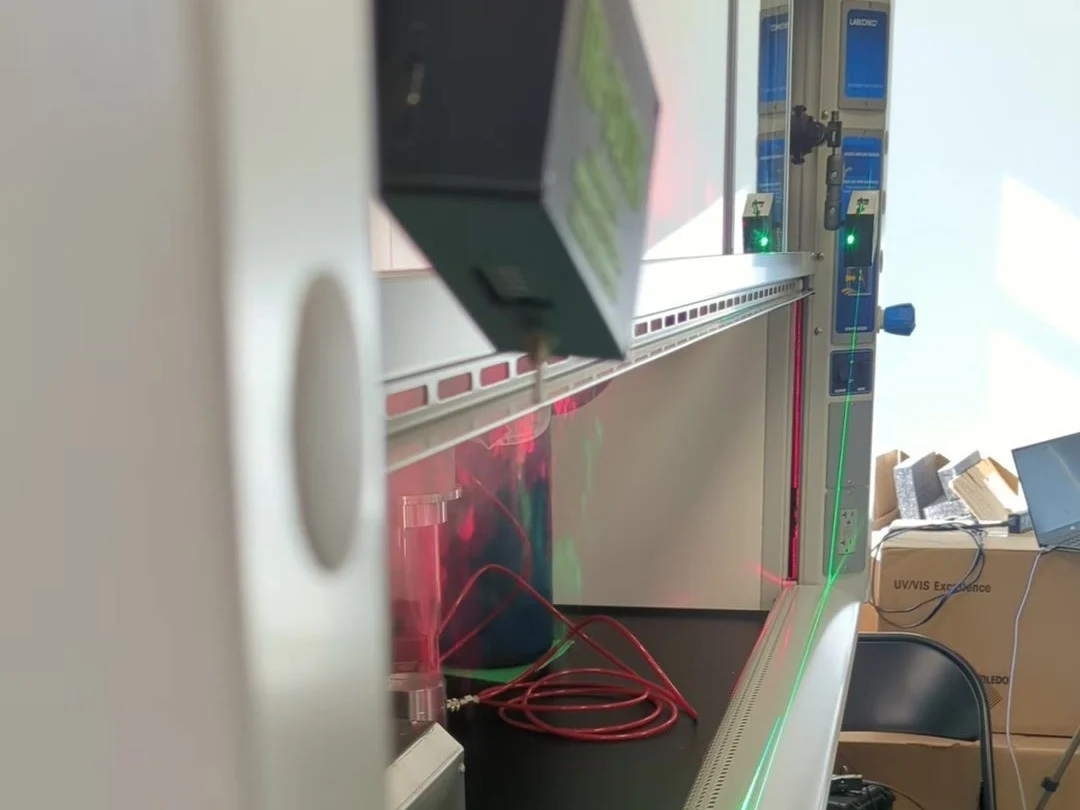
tracer gas and Tri-Color on the same hood
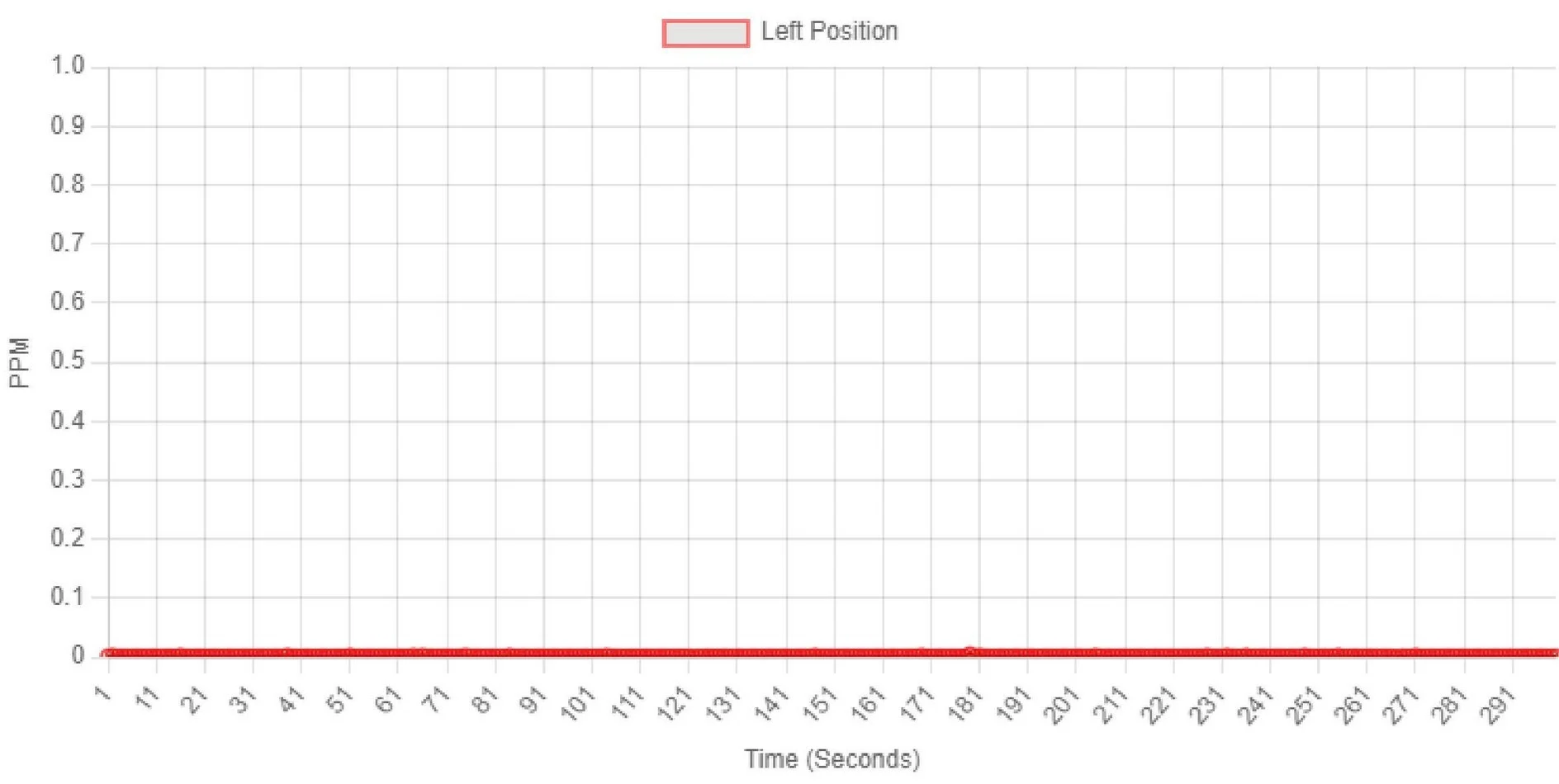
0.00 ppm
tracer gas reading at 70 fpm, at the spot where Tri-Color showed escape
The ask
A rating, plus a second look
The lab's lead engineer needed as-installed ASHRAE 110 tracer gas results on two hoods. He was also interested in dynamic containment testing, so he asked us to run Tri-Color next to tracer gas on one of them: an 8 ft bench hood with a combination sash on VAV controls.
What we did
Both methods, three setpoints
We ran the tracer gas test as installed at 100 fpm, with Tri-Color on the same hood. Then the controls contractor turned the hood down to 50 fpm and back up to 70 fpm, each setpoint confirmed at the opening, and we ran both methods again.
The result
More than a pass or fail
The vertical sash was clean. The hood failed on a 0.27 ppm peak at the center horizontal panel opening, a spot Tri-Color had already flagged before tracer gas was run there. The team left with the rating, the trouble spot, and a clear view of the hood below its setpoint.
What the side-by-side found
Same spot, two different answers
- 100 fpm, vertical sash: both methods clean.
- 100 fpm, horizontal panels: Tri-Color showed the laser dipping low first. Tracer gas then failed at the center opening.
- 50 fpm: both methods failed.
- 70 fpm: Tri-Color showed escape at the left side. Tracer gas at that same spot read 0.00 ppm.
That isn’t a fault in tracer gas. It’s a limit of it: one probe, one point, nobody moving. Tri-Color watches the whole opening.