
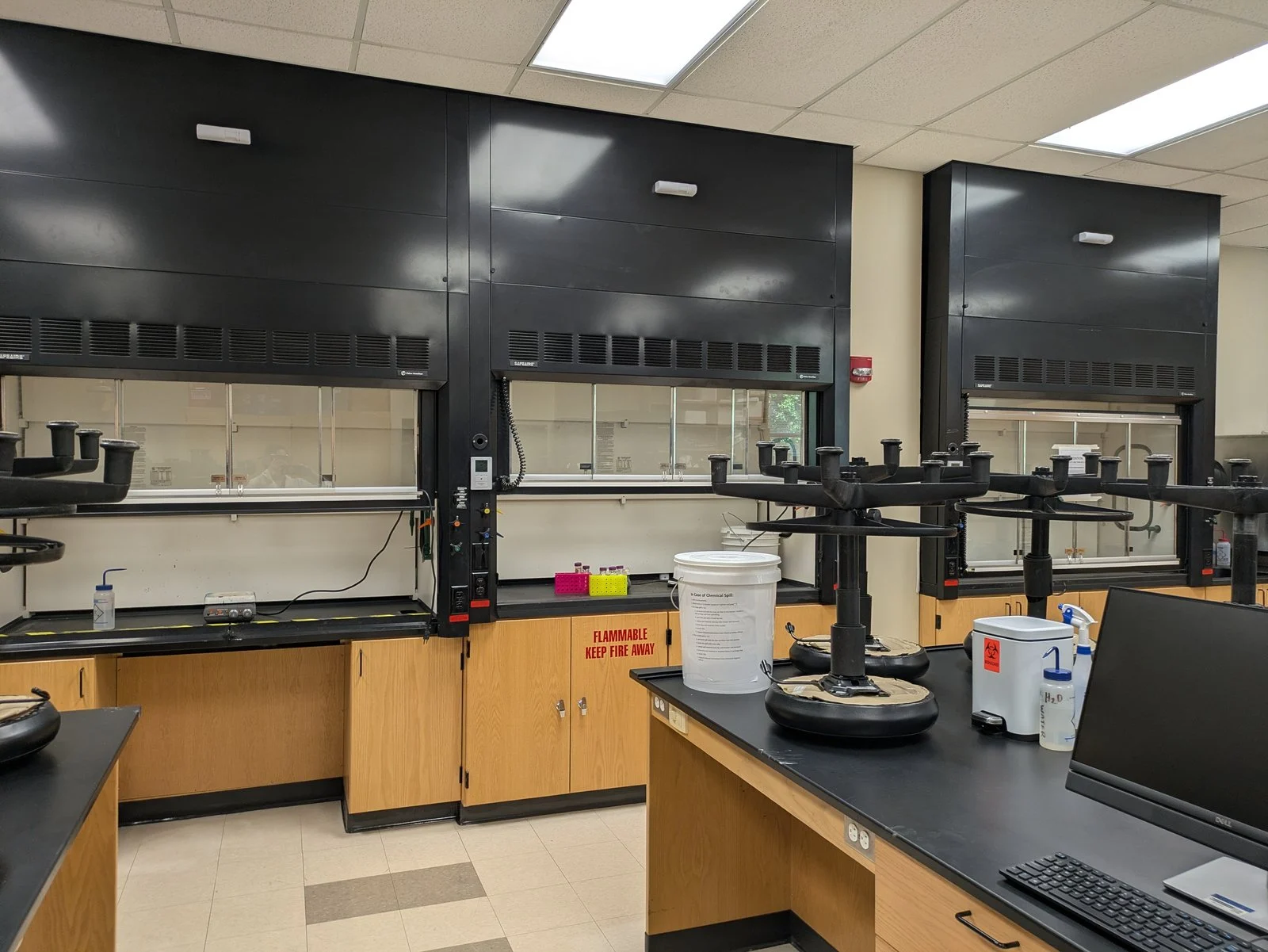
23
hoods tested in one week
22 of 23
kept in service, none replaced
Same day
re-tests, now done in-house
The ask
Containment, not just a number
A contractor had just finished upgrading the VAV controls and drives on JBU's 23 fume hoods, and every hood passed its face velocity check. Tricia Hahn, JBU's chemical hygiene officer and chemistry lab manager, wanted to see containment before the semester started, and a way to re-check hoods while the contractor's warranty was still open.
How it worked
Rent it, test it, own it
Tricia met FHC at CSHEMA 2025 and rented a Tri-Color kit for a week, finishing FHC's online tester course while it shipped. With the chemistry department chair, she tested every hood: face velocity, large and small smoke, and Tri-Color dynamic challenges with walk-bys, sash moves and supply air running. FHC consulted with her throughout, and she attended FHC's in-person workshop.
The result
Data behind every call
One hood in a three-hood lab lost containment that its monitor never flagged. It wasn't needed for that lab's courses, so it came out of service. A few hoods were readjusted under warranty and re-verified. The other 22 stayed in service with no replacements, and chemistry and biology now share a kit of their own.
What the testing found
Same hood, same number, different result
- Three hoods, one fan. Each hood passed on its own and in pairs. With all three open at once, the third hood rolled out at the face.
- Walk-by distance. Floor tiles became the yardstick. A fast walk-by two tiles from that hood pulled haze out while its monitor read 100 fpm. Three tiles is now the minimum for fast movement.
- Sash direction. Under a supply vent, one hood leaked slightly with the sash raised and held with the horizontal panels open. Users now open it side to side.
- Setback mode. Airflow behaves differently when the occupancy sensor isn't triggered, even at the same reading. Faculty now know when to keep it active.
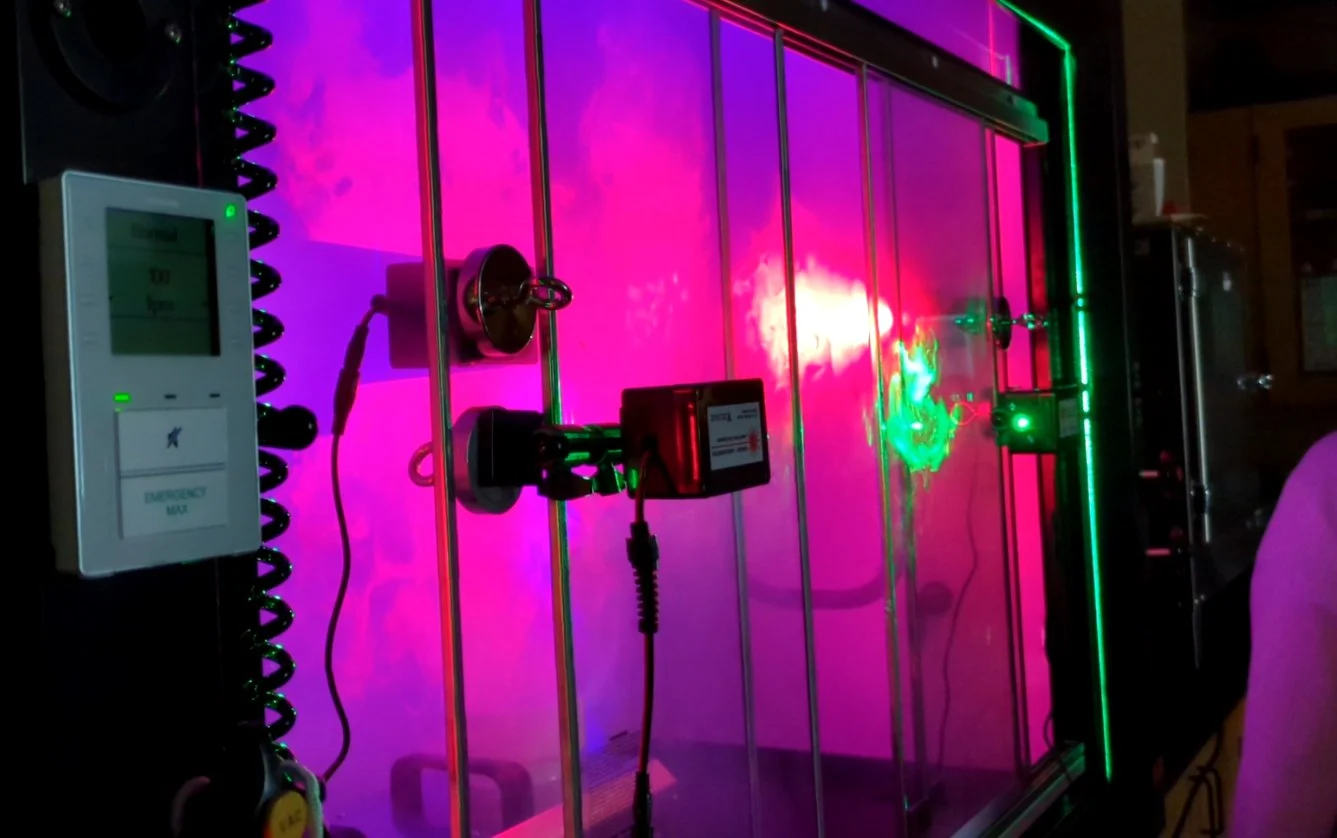
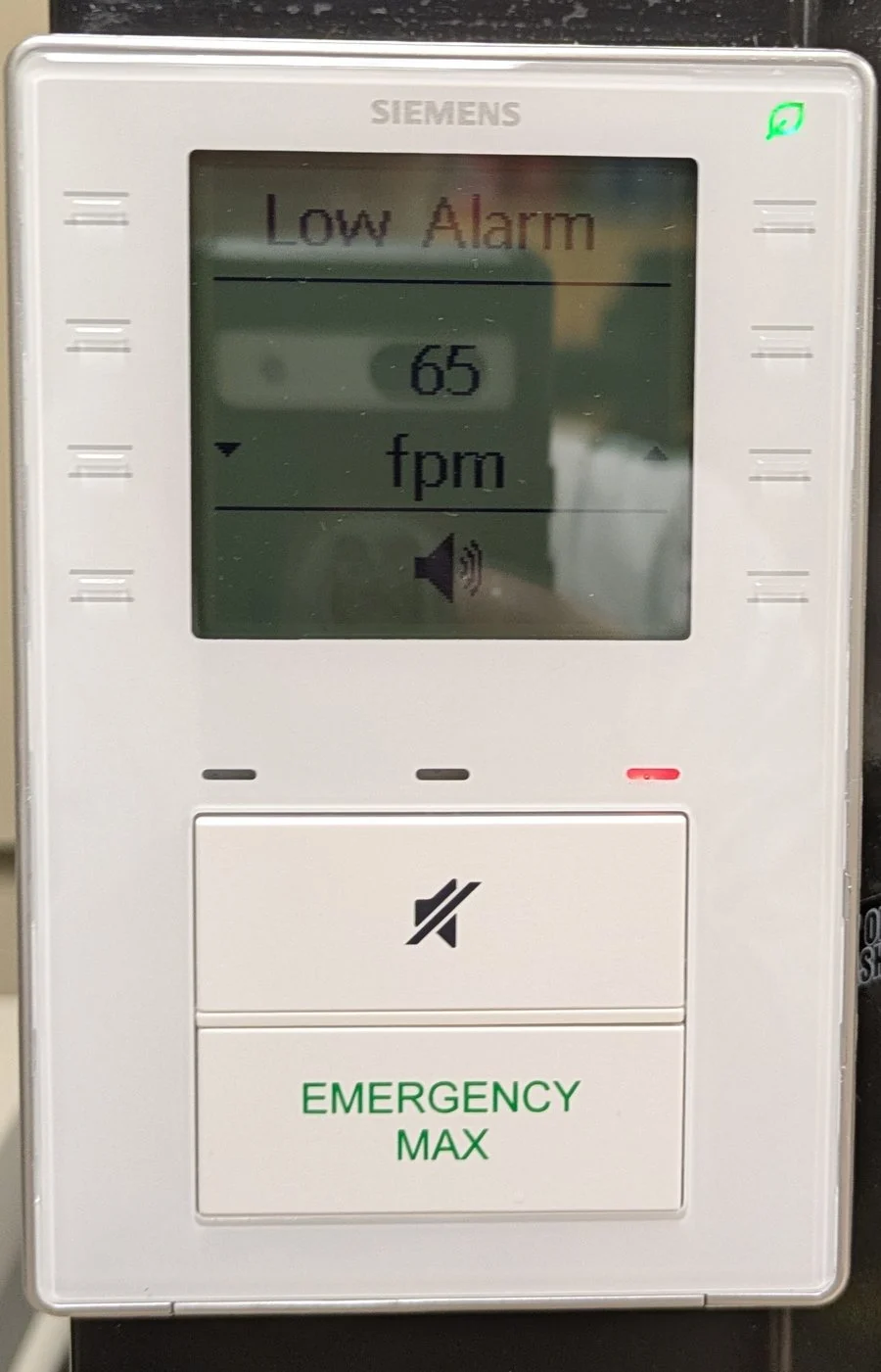
“We can visualize the containment in these hoods. And now I can show my students and colleagues how their work practices affect containment.”
Tricia Hahn, Chemical Hygiene Officer, John Brown University
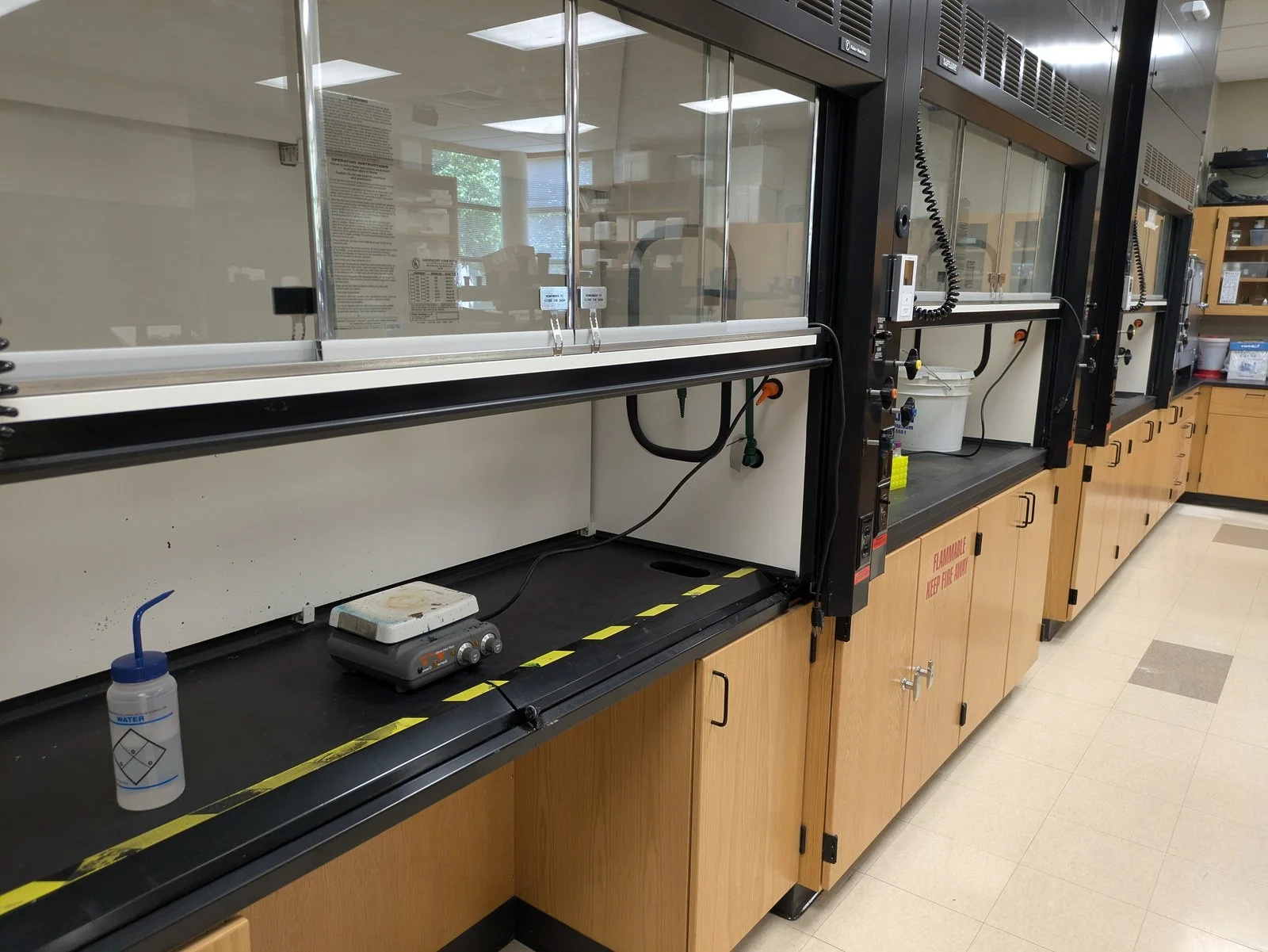
Shared with peers
At CSHEMA 2026 in Austin, Tricia Hahn co-presented with FHC’s Alex Albright on how JBU built dynamic containment testing in-house on a university budget, and what it changed for her students, faculty and facilities team.