
Consulting
The hood passed face velocity, but not the smell check.
We find out why.
Diagnostic testing for hoods that meet face velocity but do not contain.
The headaches nobody could explain
An industrial research lab passed its annual containment test. Tracer gas came back at 0.02 parts per million (ppm), well under the spec's 0.10 ppm. The sticker went on the hood. The researchers kept getting afternoon headaches. HVAC was checked, air samples were taken, nothing conclusive.
When the same hood was run with haze and lasers, the problem was visible in seconds: material streaming out of the bypass above the sash, well away from where a tracer gas probe sits.
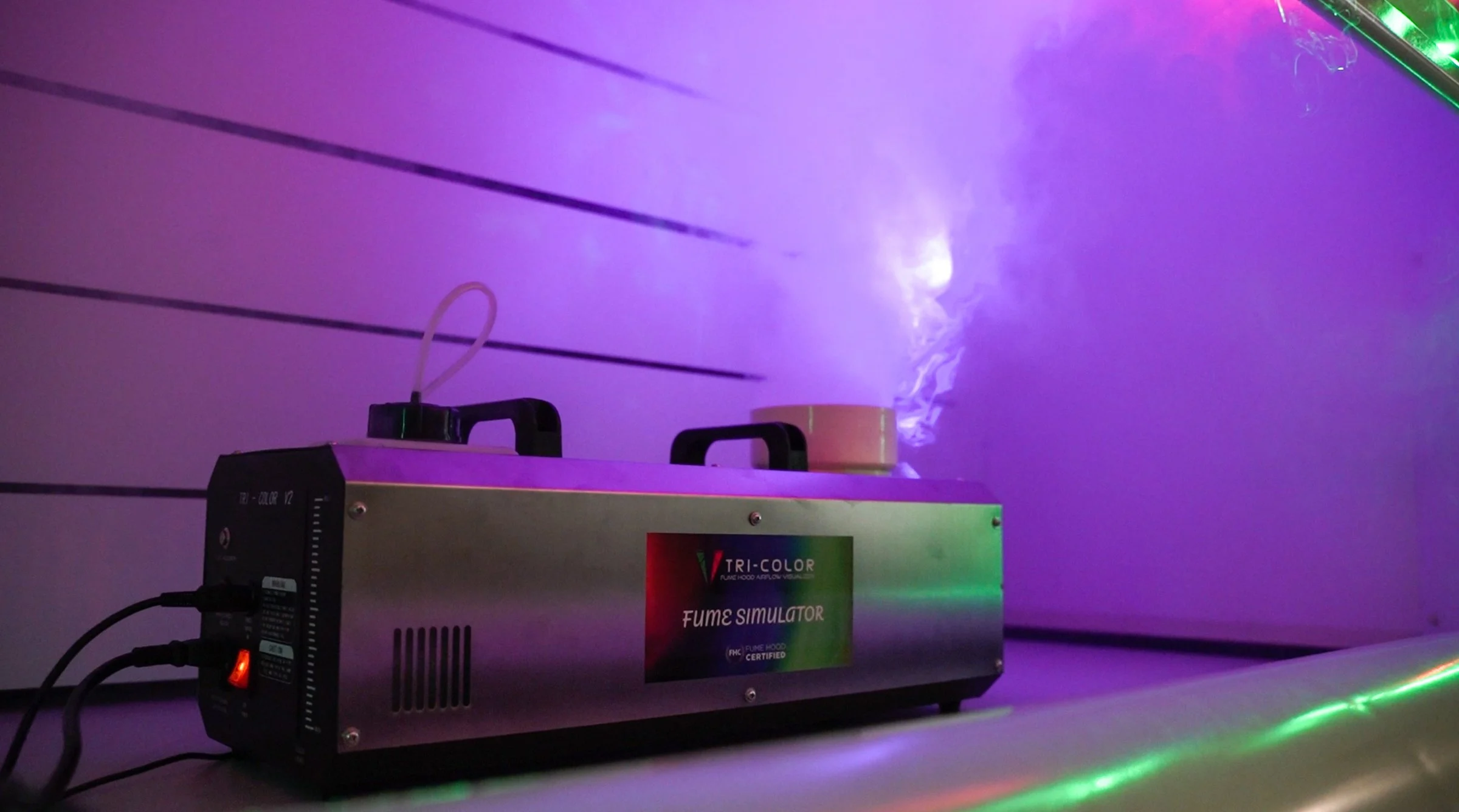
Problems we are called in for
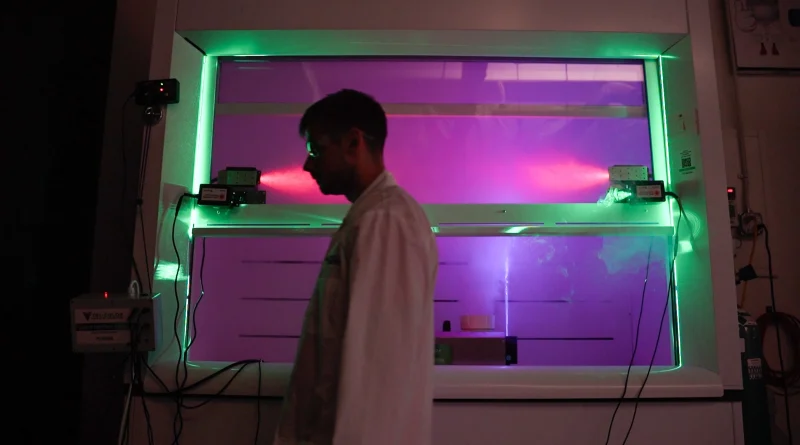
Passes velocity, fails containment
Odor complaints, headaches, alarms that nobody trusts. We run standard and modified ASHRAE 110 procedures on the hood as it is used, not as it was installed.
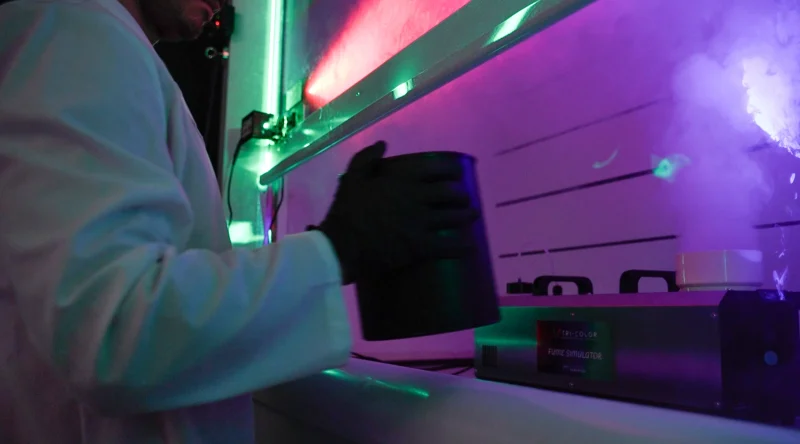
Something changed
A VAV retrofit, a new diffuser over the hood, a wall moved, a hood relocated. We trace the interaction between the hood, the room and the building system.
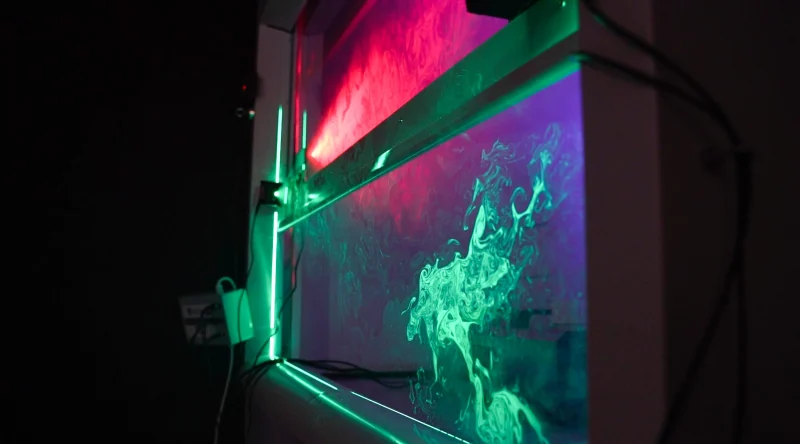
Energy, safely
Lower exhaust setpoints, baffle and sash adjustments, with containment verified at each step.
What a diagnostic engagement produces
- A site visit with ASHRAE 110 instruments and the Tri-Color visualizer.
- A written diagnostic report: face velocity profile, flow visualization, tracer gas where it adds a number, Tri-Color results with photos, and a plain-language cause.
- Recommendations for fixes, based on the needs of the customer.
- Hood identification records in the FHC Performance Tracker.
"All our elusive questions and concerns surrounding our fume hoods and how they were interacting with our HVAC system and the general ventilation of our labs were answered."
Randy Reinhart, University of Illinois Urbana-Champaign
Tell us what the lab is doing
No charge for the first conversation.